Every priority, in detail
The homepage covers the headlines. Here's the fuller story behind each one — what the problem was, what I did, and what's next — plus the full platform and a closer look at Area 3.
Problems I spotted. Work I drove. Momentum I'm continuing.
These are initiatives I personally identified and pushed forward — not just votes I cast.
Growing Access to College-Level Courses
Dual enrollment lets students take real community college classes while still in high school — both high school and college credit, at no cost to families.
Learn more
Dual-enrollment access has grown across subjects like Administration of Justice, Architecture and Engineering, Digital Media, Business, Psychology, Kinesiology, Interior Design, and Early Childhood Education.
At the same time, the district's own data shows the share of students accessing at least two college-level courses by senior year fell from 63.4% to 52.1% this past year — a real dip I'm not going to paper over. Growing dual enrollment is part of the answer; so is revisiting graduation requirements so students have room in their schedule for rigor, not just CTE.
Building Career Pathways in Construction, Business, and Healthcare
A recent county Grand Jury report found career-pathway completion averages just 15% countywide — and our numbers echo that. Most students try one career class, but few finish a full sequence that actually prepares them for a job or a trade.
Learn more
"CTE" stands for Career Technical Education — hands-on classes in fields like healthcare, business, and the trades. A student "completes a pathway" by finishing a sequence of 2–3 connected courses in one field, not just trying a single class.
Since I began raising this, the district has stood up a CTE Coordinator role, approved new course outlines, and launched new pathways using Golden State Pathways and Strong Workforce grant funding — at no new cost to local taxpayers. Nearly all students (95%) now take at least one CTE course; the next challenge is pathway completion, where only about 5–10% of students finish a full sequence. I'm also continuing to press on the pay gap that makes it hard to hire CTE teachers with real industry experience.
New Graduation Pathways for Special Education Students
For years, students with the most significant support needs had very few real options for earning a diploma. The Board adopted new pathways to change that.
Learn more
Before these changes, students with the most significant cognitive disabilities had no real pathway to a diploma, and many students with IEPs were on track to age out without one. The state convened a workgroup to address dismal postsecondary outcomes for these students and opened the door to an Inclusive Diploma option; our Board paired that with a reduced-credit pathway so an IEP team can determine, student by student, whether it's the right fit.
My priority now is making sure every eligible family actually knows this option exists.
A Phone-Free School Day, Built With the Community
When a new state law required schools to set a phone policy, I was the only trustee who joined the district's working group — students, parents, teachers, and staff — to help build it from scratch.
Learn more
The Board studied this for months, including surveys of teachers, parents, and more than 4,000 students, before voting unanimously in March 2026 for a "bell-to-bell" policy — no phones for the entire school day, not just during class. San Mateo High has run a similar policy successfully for years, which helped inform the districtwide approach.
Getting Ahead of AI
Rather than ignore how students already use AI, I asked the Superintendent to make districtwide AI policy a formal goal — and I was the only trustee to join the district's AI Task Force of students, teachers, parents, and staff.
Learn more
The task force wrestled with a hard question: what should AI never replace? Everyone agreed it should never replace real relationships between teachers and students. My focus has been on the incentive problem — if a tool gets a student a better grade with less effort, how do we make sure they're still learning something, not just shortcutting the work?
Empower San Mateo
It started small: Empowerment Through Action (ETA), a mentoring and support program at Hillsdale High for kids facing poverty, housing instability, and hunger. It worked so well we're now bringing that model to more schools as Empower San Mateo — and I show up for it personally.
Learn more
ETA launched at Hillsdale High in 2018 and now supports more than 200 students there with tutoring, mentoring, family support, and the Peace Pantry, which feeds about 140 families a week. In June 2025, the Board voted to expand that model — as Empower San Mateo — to San Mateo High, Aragon High, Bridge Academy, and Abbott Middle School, backed by nearly $1 million in state grant funding and about $500,000 in nonprofit support over two years. Rollout began in early 2026 and continues through the next several years, including new middle school partnerships.
Two new Pacific Islander mentoring groups launched at Aragon this school year as part of that expansion — more in the Area 3 section below.
Twice-Yearly Reading & Math Assessments
When I joined the Board, the only common measure of academic skills we had was a single 11th-grade state exam that didn't count toward a grade, was given once a year, and told us almost nothing about how an individual student was actually doing from month to month or grade to grade.
Learn more
The district now runs MAP assessments in reading and math twice a year at every school, giving teachers and counselors a real, ongoing picture of how each student is progressing — instead of one snapshot at the end of 11th grade.
Teachers and counselors now review this data together several times a year to flag students who need extra support early, rather than waiting for a single end-of-year test to tell us who struggled. My next priority is making sure every school follows through with fast, consistent intervention whenever the data shows a student is falling behind.
Fixing a Broken Rule for Multilingual Learners
A state review found the district had kept Multilingual Learners — students still learning English — in separate classes longer than state law allows. The district's fix then swung too far the other way, moving students into standard classes too fast, before some teachers had the training to support them.
Learn more
A routine state compliance audit found SMUHSD had kept Multilingual Learners in separate designated classes longer than state law allows. In response, the district moved students into standard classes very quickly — sometimes before they were ready, and before their new teachers had the training to support them well.
I only found out how this was playing out because I was in the room at a teacher professional development day — one of the advantages of having the flexibility to actually show up during the school day. I followed up with more conversations afterward, checked our policy against the real Education Code requirements myself, and worked with legal counsel to get it right before bringing a fix to the Board.
A Study Hall Option for Student-Athletes
Before I joined the Board, every student had to take PE in 9th and 10th grade — no exceptions, even for kids already training hard in a school sport, dance, or marching band. I watched student-athletes and performers run on empty: overscheduled, overtraining, injured, and up past midnight on homework after a long practice.
Learn more
Before this change, PE was mandatory in 9th and 10th grade with no exceptions, even for students already logging hours of physical activity through school sports or dance. Some student-athletes were getting hurt from doing too much, not too little, and losing study time they needed to keep their grades up.
I raised this directly with our Superintendent and PE staff and helped design a fix: 10th graders playing a school-sponsored sport can take a study hall period in place of PE during their season, without cutting a single PE section or breaking state education code.
Continuing the work, not starting over
Every priority below builds directly on something already underway — this is unfinished, multi-year work I'm positioned to see through.
College & Career Readiness
From CTE access to CTE completion — and stronger academic rigor
I will explore a pathway-style graduation requirement — letting students go deeper in career training, arts, or world language rather than sampling all three — so more students can finish a full pathway, not just start one. Any change would need real input from teachers and staff first. I also want to address the recent dip in A-G completion and access to college-level coursework for students who want it.
From data collection to data action
I want to move us beyond simply gathering assessment data toward districtwide practices that turn it into fast, targeted instruction and intervention.
Safe & Connected Schools
Phone-free policy done right
I will make sure implementation goes well this fall, and that we follow through on the promised digital citizenship and wellness curriculum.
AI in the classroom, from policy to practice
Progress from task force recommendations to established classroom practice, with teacher training and clear communication with families.
Building a culture of civil discourse
District survey data shows only 32% of students feel comfortable expressing views on controversial topics in class, and 67% feel they can't share an opinion for fear of how it will be received. I want to build a district culture of robust, respectful discourse and free expression — essential for raising independent thinkers and engaged citizens.
Every student safe, respected, and supported
In September 2025, the Board voted unanimously to strengthen nondiscrimination protections for transgender and gender-nonconforming students — covering respect for a student's gender identity, use of names and pronouns, equal access to school facilities and activities, and dress code freedom consistent with gender identity.
Fiscal Responsibility
Investing in growth that serves students first
From Aragon's long-requested stadium expansion to the new, purpose-built Bridge Academy campus now in design, I want to make sure facility growth is planned around real student needs as part of this fall's Facilities Master Plan.
Leading the district's next Five-Year Strategic Plan
The Superintendent has signaled it's time to begin a new five-year plan. I want to lead that work — asking hard questions, digging into Ed Code and dense policy language, and helping the Board prioritize resources around what actually serves students.
Scaling Empower San Mateo sustainably
I want to support careful, well-resourced expansion to more school sites as funding and partnerships mature — not growth for its own sake.
What's happening close to home
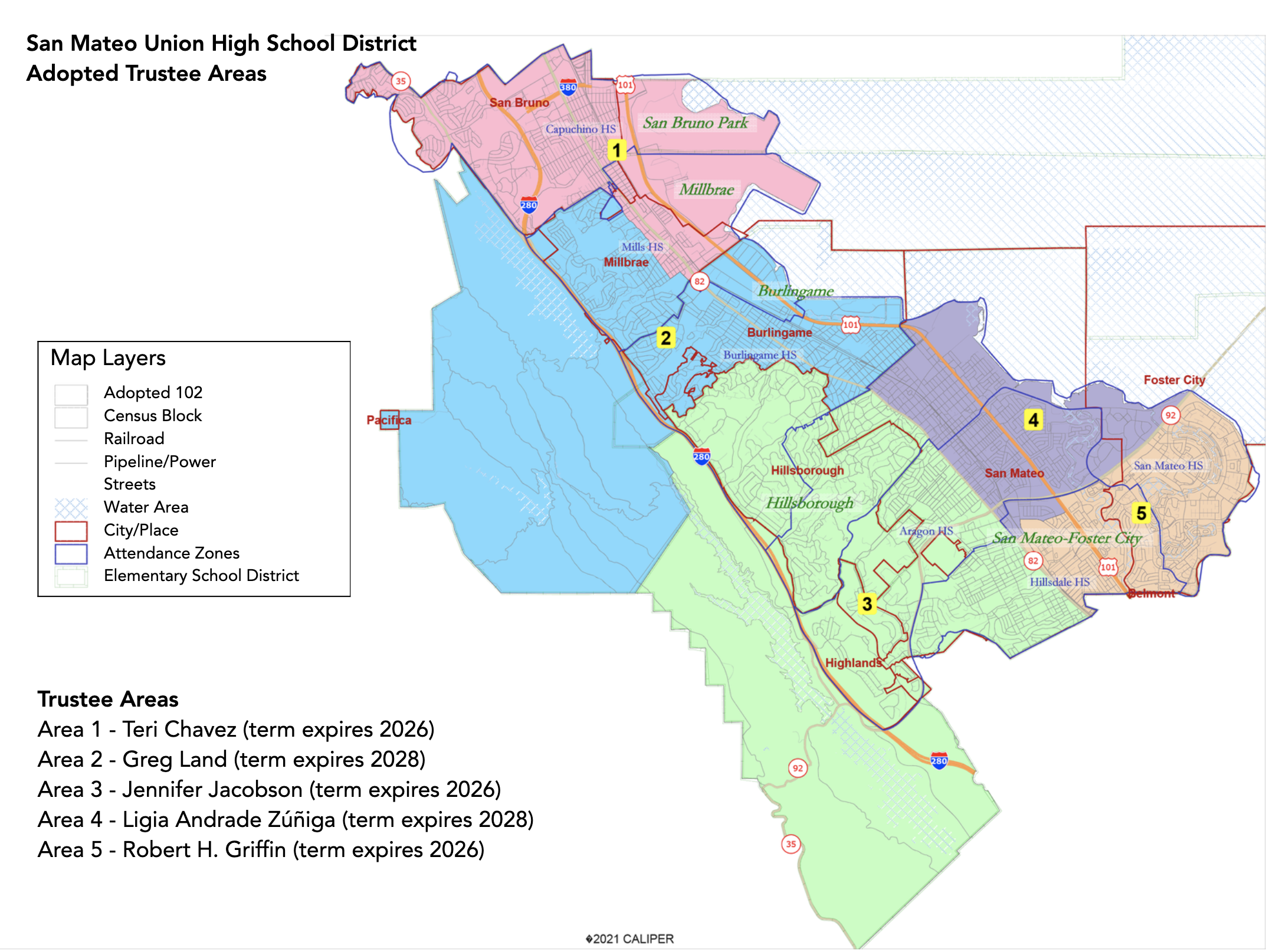
Area 3 covers Aragon and Hillsdale High Schools and the neighborhoods around them — Hillsborough, the San Mateo Highlands, and West San Mateo. San Mateo High, right next door, is part of the same community many Area 3 families are part of. A few things happening at our local schools this year.
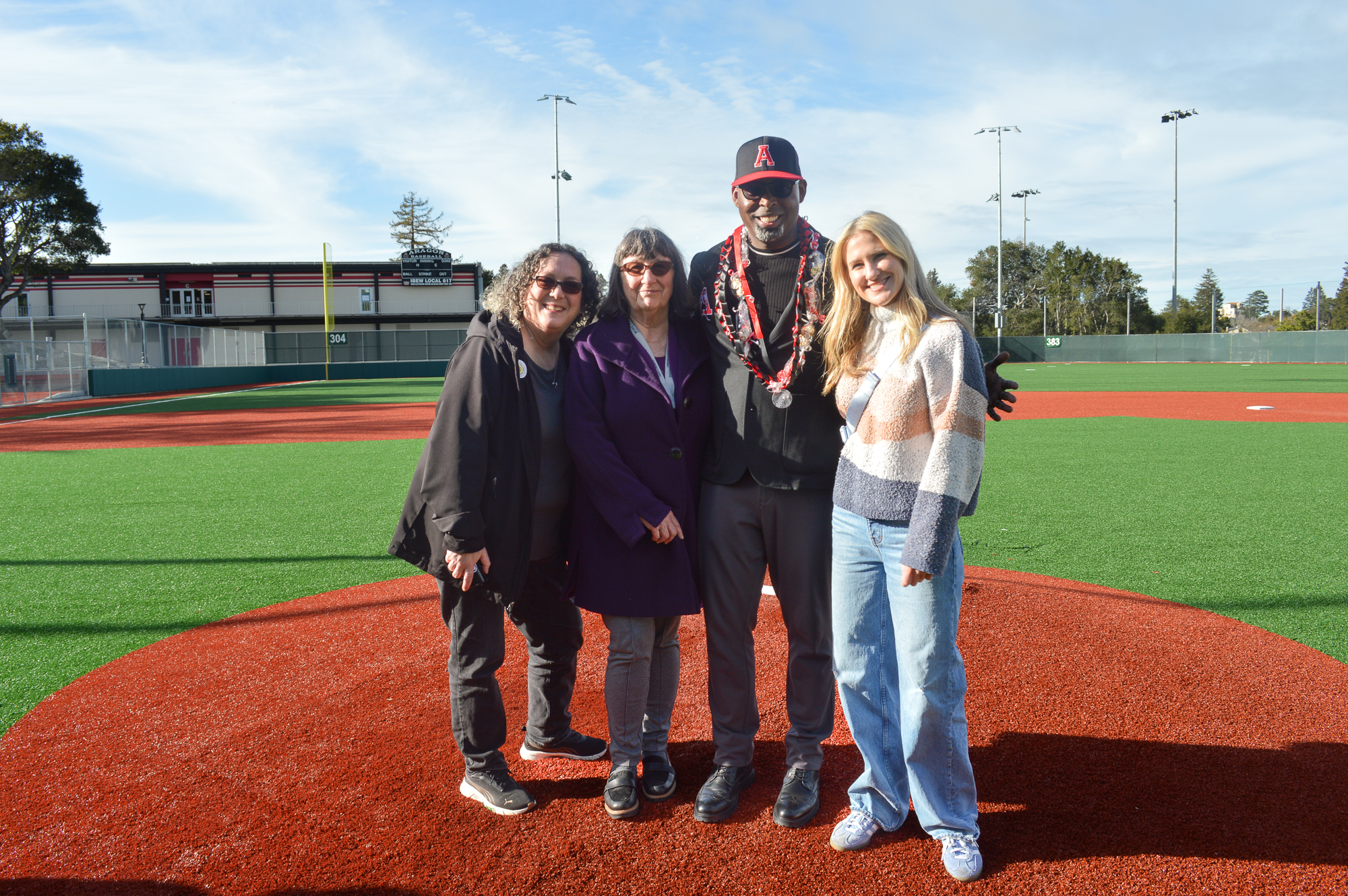
Aragon and Hillsdale are the two comprehensive high schools serving this part of the district, and they're where a lot of my track record started — including the PE study hall fix, which began with my own daughter at Hillsdale, and the Peace Pantry, which I still volunteer at weekly.
Trustee area lines and school attendance lines aren't the same thing, though — Hillsborough addresses split across attendance zones, so a good number of Area 3 families have students at Burlingame High as well, not just Aragon and Hillsdale.
Here's what's new at the site level this year.
A New Turf Softball Field for Aragon
At our last board meeting, we approved the design for a new synthetic turf softball field at Aragon — new dugouts and other upgrades to match the investment our baseball field got last year. Between design and the state's required review process, the field is expected to be playable by early 2028. Our softball program deserves the same level of support.
Keys to Building a Tech Healthy Household
On September 16, I helped bring a parent workshop to the district — "Keys to Building a Tech Healthy Household," presented in partnership with Project Reboot — timed early in the school year alongside the rollout of our new phone-free school policy. Parents left with practical tools: a parent handbook, a dinner-table discussion guide, and more.
A New Athletic Training Complex at San Mateo High
San Mateo High opened a new 20,000-square-foot athletic complex this year — a gym, team and training rooms, a classroom, and seating for 820 spectators — funded by the Measure L bond voters approved in 2020. It's part of the same wave of facility investment that's already reached Aragon and Hillsdale.
A Brand-New Gym at Burlingame High
Burlingame High opened a brand-new gymnasium this year — a full-size gym, weight room, locker rooms, and practice space — funded by the Measure L bond voters approved in 2020. A meaningful number of Area 3 families have students at Burlingame High, and it's seen the same level of facility investment as Aragon, Hillsdale, and San Mateo High.
A New Trade Training Program at Aragon
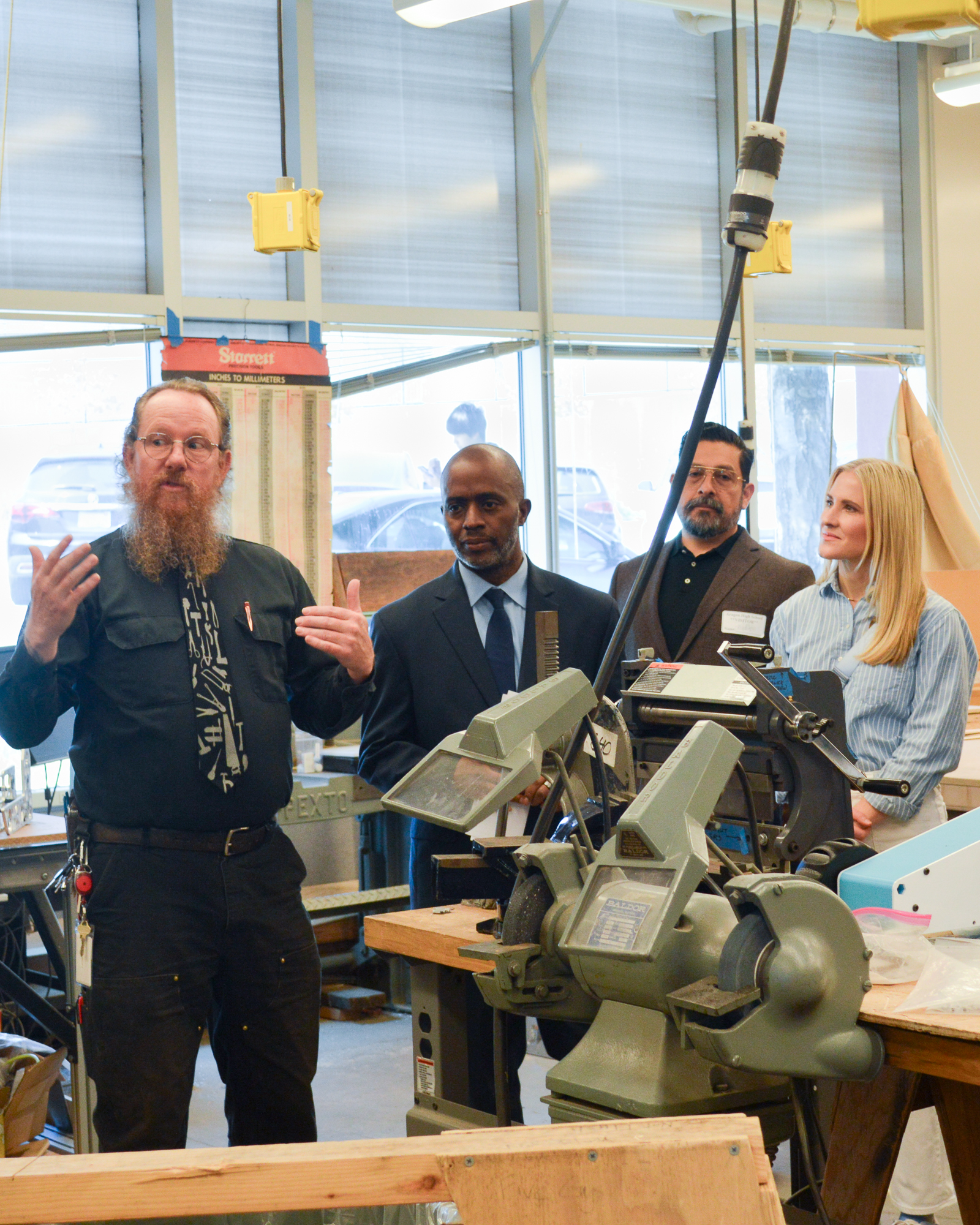
Aragon launched a hands-on trades program this year — the only one of its kind at a San Mateo County high school. Students learn construction math, safety, and job-site skills, and can earn a real safety certification before they even graduate. It's for students who want a skilled trade, not just a four-year degree.
New Pacific Islander Mentoring Groups
As Empower San Mateo expanded to Aragon this year, two new Pacific Islander mentoring groups launched with weekly meetings — giving those students a consistent, supportive space at school. It's a direct outgrowth of the community relationship-building I've done, including helping convene a meeting between the Superintendent and the Pacific Islander community.
New Career Pathway Courses at Hillsdale and Aragon
Both of our Area 3 high schools are deepening career training this year. Aragon piloted a new Business & Entrepreneurship pathway that's now expanding to Hillsdale, and Aragon has also added a new Interior Design pathway — part of the district's broader push to help students go deeper in one field instead of just sampling a single class.
A Smarter Math Sequence at Hillsdale
Hillsdale reordered its standard math sequence — Geometry in 9th grade, Algebra in 10th. After 3 years of tracking, the results are in: more students are now succeeding in Algebra 2 as a result. It's the kind of site-level instructional change I want to see studied and, where it works, considered for other schools.
Stadium Seating at Aragon
Aragon's new turf baseball and flex field opened last spring — a great win for our athletes. But the stadium next door still seats only about 650 for a student body of 1,680, the tightest capacity in the district, and families have been asking for more room for six years. I'll give this need the consideration it deserves when we look at this fall's Facilities Master Plan.